SIMNA Resource Hub
Reflections on AES 2024: Wayfinding, First Nations Knowledge, and the Future of Evaluation
As we navigate through the landscape of social impact, we often find ourselves rushing towards outcomes, forgetting that the path itself is as rich and significant as the destination. The practice of evaluation offers us an invitation to pause, to truly be present with the work we are engaged in. It encourages us to view our efforts not as isolated actions but as interconnected threads within a larger, unfolding ecosystem. Like mindfulness, evaluation is not simply about measuring what is, but about understanding how we are aligning our intentions with the ripples of change we are creating. In this moment, the act of evaluating becomes a practice of awakening to the present, grounding ourselves in the now, and recognising the beauty of the journey.
A Journey through Connection, Complexity and Change
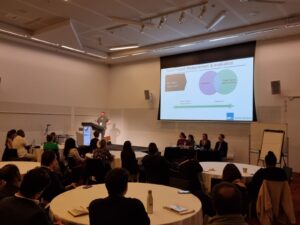
The 2024 Australian Evaluation Society (AES) International Conference, held in Melbourne, brought together evaluators, researchers, and changemakers under the evocative theme of Wayfinding. This metaphor for navigating complexity resonated deeply, encouraging us to see evaluation as a relational, reflective process rather than a purely technical exercise. This year, more than ever, the conversations felt urgent and transformative, grounded in the pressing realities of climate crises, systemic inequities, and the growing recognition of Indigenous leadership in evaluation.
Walking into the conference felt like stepping into a living ecosystem—alive with dialogue, bursting with ideas, and rooted in the shared soil of purpose. A gathering that challenged us to rethink the systems we navigate and the futures we help shape.
The theme of Wayfinding felt particularly relevant in the context of 2024’s global challenges. From escalating climate emergencies to intensifying social inequities, evaluators are grappling with how to respond meaningfully to complex, systemic issues. The conference provided a platform to explore innovative methodologies such as Qualitative Comparative Analysis (QCA) and journey mapping, alongside participatory approaches that centre lived experience. However, it also made clear that traditional knowledge systems have much to teach us about navigating these complexities.
Interconnection and Lens of Reflection: Emerging Themes
First Nations Leadership: Reclaiming Evaluation as Cultural Practice
One of the most profound aspects of AES 2024 was the illumination of First Nations leadership, challenging us to reimagine evaluation as more than metrics—it is a weaving of stories, relationships, and enduring community benefits. Grounded in ancient knowledge systems, First Nations evaluators showed us how to align the act of evaluation with cultural integrity and self-determination.
Central to this vision was the concept of community navigators—trusted individuals who bridge cultural and relational worlds. These navigators, more than facilitators, are stewards of trust and values, ensuring that evaluations honour local worldviews. Yet, their roles often go underfunded and underappreciated. Recognising and resourcing their contributions is not merely a gesture of respect but a necessity for authentic, ethical evaluation.
Storytelling emerged as a vital practice—not peripheral but central to sensemaking. Unlike raw data, stories breathe life into evaluation, capturing the richness of lived experience. In one moving example, a session on Warlpiri country in the Northern Territory recounted evaluators who spent two years building relationships within the community before collecting formal data. This intentional process of trust-building transformed the evaluation into a profound reflection of the community’s values and aspirations.
Technology and Humanity: AI in Evaluation
The integration of artificial intelligence (AI) in evaluation sparked a conversation of opportunity tempered with caution. As Ethel Karskens highlighted, AI has the power to transform data analysis, revealing patterns and connections otherwise hidden. Yet, its promise comes with an ethical question: How do we ensure that AI amplifies, rather than erases, the human stories that ground evaluation in compassion and justice?
The ethical use of AI requires vigilance. While tools like Power BI and Tableau offer clarity and innovation, they must remain subservient to the deeper purpose of evaluation—serving humanity. Indigenous governance practices, steeped in reciprocity and storytelling, remind us that not all wisdom can be digitised. When technology and tradition are woven together, they create a balance where each informs and uplifts the other. This interplay between innovation and heritage holds the key to evaluation’s future—a harmonious dance where humanity remains at the heart.
Trust: The Foundation of Evaluation
Trust emerged as a foundational theme, particularly in First Nations-led contexts. Building trust is neither swift nor superficial; it demands humility, patience, and alignment with the values of those we aim to serve. Relationships, the conference reminded us, must precede results. Rushing to outcomes risks eroding the very foundations upon which meaningful evaluation rests.
Trust is a process of nurturing integrity and honouring commitments over time. It is an act of reciprocity, a mutual exchange where evaluators earn the privilege of engaging with communities. Without trust, evaluation becomes hollow—disconnected from the people whose stories it seeks to amplify.
Stories and Data: A Dynamic Balance
The conference highlighted the vital interplay between stories and data. Stories bring humanity and context to data, while data provides structure and credibility to stories. Together, they create a dynamic balance, each enhancing the other’s meaning and impact.
When indicators are rooted in values—such as resilience or well-being—they transcend mere numbers. Instead, they become tools for envisioning hopeful futures. This balance between the quantitative and the qualitative is essential for creating evaluations that resonate not just on paper but in the lived realities of communities.
Reflexivity: Addressing Bias and Embodying Justice
June Oscar AO’s keynote was a powerful call to confront biases and embrace reflexivity as an ethical imperative. Reflexivity demands that we, as evaluators, turn the lens inward—questioning our assumptions, methods, and the structures that shape our work. It is a practice of accountability and humility, reminding us that we are not neutral observers but active participants in shaping the narratives we evaluate.
Oscar’s words were a reminder that evaluation is not just about measuring change but embodying it. Justice, equity, and inclusion must be lived values within the evaluation process. This shift requires courage—a willingness to challenge entrenched systems and to align our practices with the transformative potential we seek to unlock.
A Living Practice: The Future of Evaluation
The themes emerging from AES 2024 remind us that evaluation is not a static process. It is a living, evolving practice that demands constant reflection, adaptation, and collaboration. At its best, evaluation is a convergence—where technology meets tradition, trust meets action, and stories meet data.
In this convergence lies a profound wisdom: the understanding that evaluation is a process of co-creation. It is an act of balance, where humility guides innovation and where the past informs the future. As we navigate toward a more just and equitable world, evaluation invites us to listen, to reflect, and to reimagine the possibilities of collective transformation.
Keynote Highlights: Inspiring New Directions
Indy Johar: Systems Change Through Knowledge – A Call to Rethink Leadership
Indy Johar of Dark Matter Labs in the UK cast a bold light on the cracks and possibilities within our global systems. As a “Mission Steward,” Indy invited us to imagine leadership unbound from tradition, delivering a powerful keynote, weaving the interconnectedness of social, economic, and environmental crises. “Maybe we should be replacing CEOs with Chief Knowledge Officers,” a profound provocation that rippled through the room, challenging us to reimagine leadership roles—provoked fresh thinking about evaluators’ roles in systemic change. In a world teetering on the edge of climate crisis and social upheaval, his call for knowledge-driven leadership incited action—a challenge to cultivate wisdom as the driver of innovation.
June Oscar AO: Art Woven with First Nations Perspectives
At the conference’s core was a resonant theme: the wisdom of First Nations peoples. June Oscar’s keynote on Wiyi Yani U Thangani (Women’s Voices – First Nations Gender Justice) introduced the Grandmother Tree Theory of Change. Imagine a towering tree, its roots intertwined with the earth’s history and its branches reaching for the sky. This tree embodies the strength and wisdom of First Nations women—knowledge passed through generations, grounding communities and guiding them toward a sustainable future.
The metaphor of this ancient tree, its roots deep and its branches wide, was a poignant reminder of the intergenerational knowledge we are called to honour and protect. Her poignant question—“How do we navigate, within complexity, to care for us and our planet?”—reinforced evaluation’s role in addressing societal and environmental challenges while centring Indigenous knowledge.
Shifting Perspective: Stand Out Sessions
Immersive Empathy through Technology: Samantha Abbato introduced virtual reality as a tool for co-design, enabling participants to “step into” lived experiences. This innovative method showcased the potential of technology to deepen empathy and bridge understanding.
Strategic Alignment in Uncertain Times: Shefton Parker and Amanda Sampson illuminated the role of MEL in navigating organisational turbulence. Their approach, linking evaluation with governance and strategy, highlighted how MEL practitioners can act as pivotal change agents during crises.
Cultural Safety and Justice: Lydia Phillips’ presentation urged attendees to consider whose voices are amplified in evaluations. Her call to embed trauma-informed and culturally safe practices was a reminder that ethical evaluation is inseparable from justice.
Joy in Evaluation: Erika Fortunati showcased gamification as a way to infuse data collection with connection and celebration. Her work demonstrated that evaluation can be both meaningful and enjoyable.
Navigating the Future: Lessons from AES 2024
A Vision for the Future: Climate Justice and Collaboration
Looking ahead, climate justice will be a pivotal lens through which social impact is measured, with evaluation continuing to expand and evolve. Indigenous knowledge systems, grounded in ecological interconnectedness, are central to addressing the climate crisis, offering vital insights into climate adaptation. First Nations speakers at AES 2024 reminded us of their communities’ leadership in this area, yet also highlighted the ongoing marginalisation of Indigenous voices in decision-making—a reality that evaluators must actively work to change. As evaluators, we must consider the full impact of our work, not just in terms of outcomes but also in fostering long-term relational and environmental health.
Foresight in evaluation goes beyond simply reflecting on where we are; it encourages us to imagine where we might go. True evaluation is about envisioning the future, about seeing the invisible, and understanding that every action we take is a seed for tomorrow. By integrating anticipatory practices with our existing frameworks, such as the Theory of Change, we can not only assess the past but actively shape the future.
The future of social impact evaluation will be increasingly collaborative, with partnerships that bridge global, local, and Indigenous knowledge systems. These collaborations will amplify the voices of communities, empower them to co-create solutions, and ensure that evaluation is not just a tool for accountability but a vehicle for transformative change.
In this emerging era, evaluators will no longer simply assess what has been done—they will actively shape what can be. Through trust, reflexivity, and innovative methodologies, the evaluation field will continue to evolve, responding to the challenges of today and anticipating the needs of tomorrow.
Where to Next? Closing Thoughts: A Journey Worth Taking
Reflecting on the conference, its animate call to action reverberates, stirring souls into direction; evaluation is not about measuring impact but creating it. This requires embedding self-determination, co-design, and cultural humility into every stage of our work, interrogating our tools, adapting our methods, and centering the voices of those most affected. As June Oscar AO asked, “How do we navigate, within complexity, to care for us and our planet?”
This question guides me as I carry forward the conference’s lessons. Evaluation is a collective endeavour, a symphony where diverse voices—stakeholders, communities, policymakers—compose the melody of impact. Indigenous and community-led models showcase the transformative power of collaboration. Through shared governance, reciprocal learning, and co-creation, we create evaluations that resonate deeply and authentically, capturing the full essence of the human experience, exemplifying this collaborative spirit, where accountability and empowerment are seamlessly intertwined.
Yet, evaluation does not exist in isolation; the process is not an endpoint but a beginning—an opportunity to transform data into wisdom, insights into meaning, and strategies into stories of change. It challenges us to embrace both the measurable and the immeasurable, to craft a world where every decision serves the greater good, and where evaluation becomes the bridge between intention and transformation.
As we look toward the future of evaluation, let us embrace evaluation as a living, breathing practice—a means of reimagining impact. By fostering foresight, humility, and diverse wisdom, we can transform evaluation from a tool of accountability into an art of possibility, shaping a just and flourishing future with purpose, vision, and heart.
Author: Amy Grenfell, SIMNA Victoria Organising Committee