SIMNA Resource Hub
Reflections from the Social Impact Summit 2024
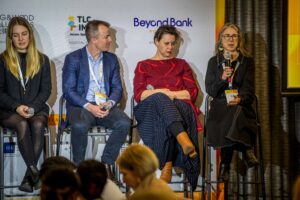
Thanks to SIMNA, I had the pleasure of attending the Social Impact Summit 2024: Moving from Insight to Action earlier this month. At For-Purpose Evaluations, we support NGOs, local, state and federal government and social enterprises to measure and communicate their impact. I value the diversity of our clientele, who have different needs and priorities for understanding their impact. The summit offered a new lens through which to understand social impact, beyond my day-to-day work. The event was a gathering of diverse minds and sectors, with one common objective – enhancing the social good. Here I want to share my reflections and key insights that resonated with me, both personally and professionally:
- The current siloed system is not working for the majority and we need cross-sector collaboration to fix it
- Tools from community development can be applied anywhere
- We need to create space for more nuanced and constructive conversations
Opening keynote
It would be remiss of me not to highlight the keynote address of the conference. The keynote speech by Craig Foster AM was a powerful start to the summit. Emphasising Australia’s treatment of refugees as a standard of our collective humanity, he posed critical questions to the audience: “Who are we? Who do we want to be? What are our standards?”. Craig’s message was clear: we must act and speak up against social injustice. He acknowledged the social cost of speaking up but stressed the importance of using our social power to advocate for change. His address set the tone for the next two days – one of accountability and action.
The current siloed system is not working and we need cross-sector collaboration to fix it
We need to learn from each other and work together! A recurring theme throughout the summit was the necessity of cross-sector collaboration. Complex social issues require multidisciplinary approaches, bringing together diverse perspectives and expertise. I loved sessions like “Building Resilient Communities through Commoning” on Day 1, which showcased innovative, community-driven solutions. The power of community ownership, of people ‘having skin in the game’ really resonated with me. We often think of ‘beneficiary’ and ‘provider’ as separate stakeholders in social impact initiatives. Sessions such as this were a great example of how they can be blended into one – people who benefited from the initiative were also the ones providing it. The importance of listening to and responding to community needs was highlighted as a cornerstone for building resilient communities.
In the session “Breaking the Mould: Disruptive and Innovative Growth Models for Social Good”, we learned about innovative approaches to philanthropy and social good. The presentation from First Nations Futures particularly struck a chord with the audience. With only 0.5% of philanthropic funding going to First Nations initiatives, the session underscored the need for community-led evaluations and unique models of success tailored to the needs and perspectives of First Nations communities.
The conversations I had during networking drinks on Day 1 also reflected this notion. I was impressed at the diversity of delegates from across all sectors. There was a broad recognition that the current system is not working for the majority, but overall, there was a sense of hope for what could be achieved. Everybody had a clear eagerness to learn more and expand their current thinking. The final session on Day 2: Measuring What Matters drove this message home. SIMNA’s Laura Glynn appeared alongside other social impact experts from government, corporate and not-for-profits for a panel discussion on the wellbeing economy and the national Measuring What Matters framework. Each panellist called for cross-sector, cross-cultural and multidisciplinary approaches to enhance the social good. Systemic change cannot occur in silos – we need to work together to drive meaningful impact.
Tools from community development can be applied anywhere
Get people on board! Creating social impact is about building and engaging communities. The tools from community development practice have versatile applications, and they can be applied to social impact projects both locally and globally. This idea was reinforced in various sessions, including “Apathy to Action: Tackling Post-COVID Inequality”. The session included discussions about the persistent inequalities in education exacerbated by COVID-19, as well as highlighting the value of systems thinking and behavioural science in addressing these challenges. It became clear that creating social impact is fundamentally about community, regardless of the hyperlocal or global focus for enacting change.
We need to create space for more nuanced and constructive conversations
We need to slow down and listen! One of the most insightful sessions was the keynote address on Day 2: “Constructive Conversations”, led by Chloe Spackman and Dr. Renu Burr. They discussed the barriers and enablers of open dialogue and their research on the 2023 referendum. A key finding was that media both fuels and reflects our perspectives. This dynamic is exacerbated by the bite-sized info-grabs we see dominating the media now. For me, this finding evoked a sense of accountability on how we consume and interpret our media content – rather than disregarding the issue as an external problem that we have no control over.
Dr. Burr provided a simple set of principles for creating open dialogue: 1. Curiosity, 2. Compassion, 3. Courage and 4. Listening. Her key message was the need to be vulnerable and ‘get comfortable with the discomfort’. The session included a powerful exercise facilitated by Dr. Burr where we worked in groups to discuss real-world challenges team members were experiencing, for the purpose of creating safe spaces for vulnerable and authentic discussions. One group member provided an example of a really difficult political debate happening at their workplace, and how their workplace was struggling to make a firm statement on their position and how they could best support their staff. A wise group member suggested that taking a firm position was perhaps not what they needed to do right now. Instead, maybe now they just need to support staff by facilitating difficult and sometimes uncomfortable conversations and creating a space for them to occur. Another group member suggested thinking about where the organisation might be five years from now and reflecting back – ‘what did they want to be able to say about their response?’ This session was a good reminder of the wisdom in the room and the value of diverse perspectives.
Dr. Burr challenged us to not create the solutions, and as a solutions-focused person, this was certainly a significant challenge for me. Dr. Burr said that “by talking about the problem you create space for the solutions to emerge”. Basically, you need to focus on understanding the problem better, and keep the ‘fix-it’ instincts at bay. I realised this is something we try to practice at FPE in our work. We spend significant time understanding the client, their context, their service users and their needs before jumping into the nitty gritty of measurement tools or data collection. This can feel counterintuitive for some who are eager to start measuring their impact, but we continue to learn how valuable this process is for embedding a meaningful social impact measurement in organisations. Dr. Burr also challenged our reflexes further with, “the more urgent the crisis – the more there is a need to slow down”. This felt like sound and timely advice for the current state of the world.
Attending the Social Impact Summit 2024 was an inspiring experience, and I am eager to apply these learnings in my future work. It highlighted the importance of cross-sector collaboration, the versatility of community development tools, and the need for open, constructive conversations. Let’s continue to innovate, collaborate, and engage in meaningful conversations to drive positive change. Thank you SIMNA, for the opportunity to be part of this wonderful event.
Author: Jenna McDonald (SIMNA Sydney Organising Committee)